Is This Anxiety or Something Medical? Understanding Health Anxiety by a Colchester Therapist
/Is This Anxiety or Something Medical? Understanding Health Anxiety by a Colchester Therapist
If you’ve ever found yourself thinking,
“What if this isn’t anxiety this time?”
you’re not alone.
This is one of the most common and most distressing thought patterns I see as a Colchester therapist who specializes in anxiety. Many of my clients come in feeling stuck in this exact loop, unsure whether they can trust their body or their mind. If you’re new here, you can learn more about my approach to anxiety therapy in Colchester.
It often starts with something small:
a new sensation, a symptom, or a feeling in your body that catches your attention.
A tight chest.
A headache.
A skipped heartbeat.
A wave of dizziness.
And then the question shows up:
“What if something is actually wrong?”
When Anxiety Feels Physical (Because It Is)
Here’s where things get confusing: anxiety is not “just in your head.”
Anxiety is a full-body experience.
It can cause:
Increased heart rate
Chest tightness
Shortness of breath
Dizziness or lightheadedness
Tingling or numbness
Stomach discomfort
Muscle tension
So when you notice something in your body, you’re not imagining it. The sensation is real.
But the meaning your mind assigns to that sensation?
That’s where anxiety tends to take over.
As a therapist Colchester clients often turn to for anxiety support, I see how quickly the brain moves from noticing to catastrophizing especially when uncertainty is involved. This is something we work through step-by-step in anxiety therapy sessions, especially for clients dealing with health anxiety and panic symptoms.
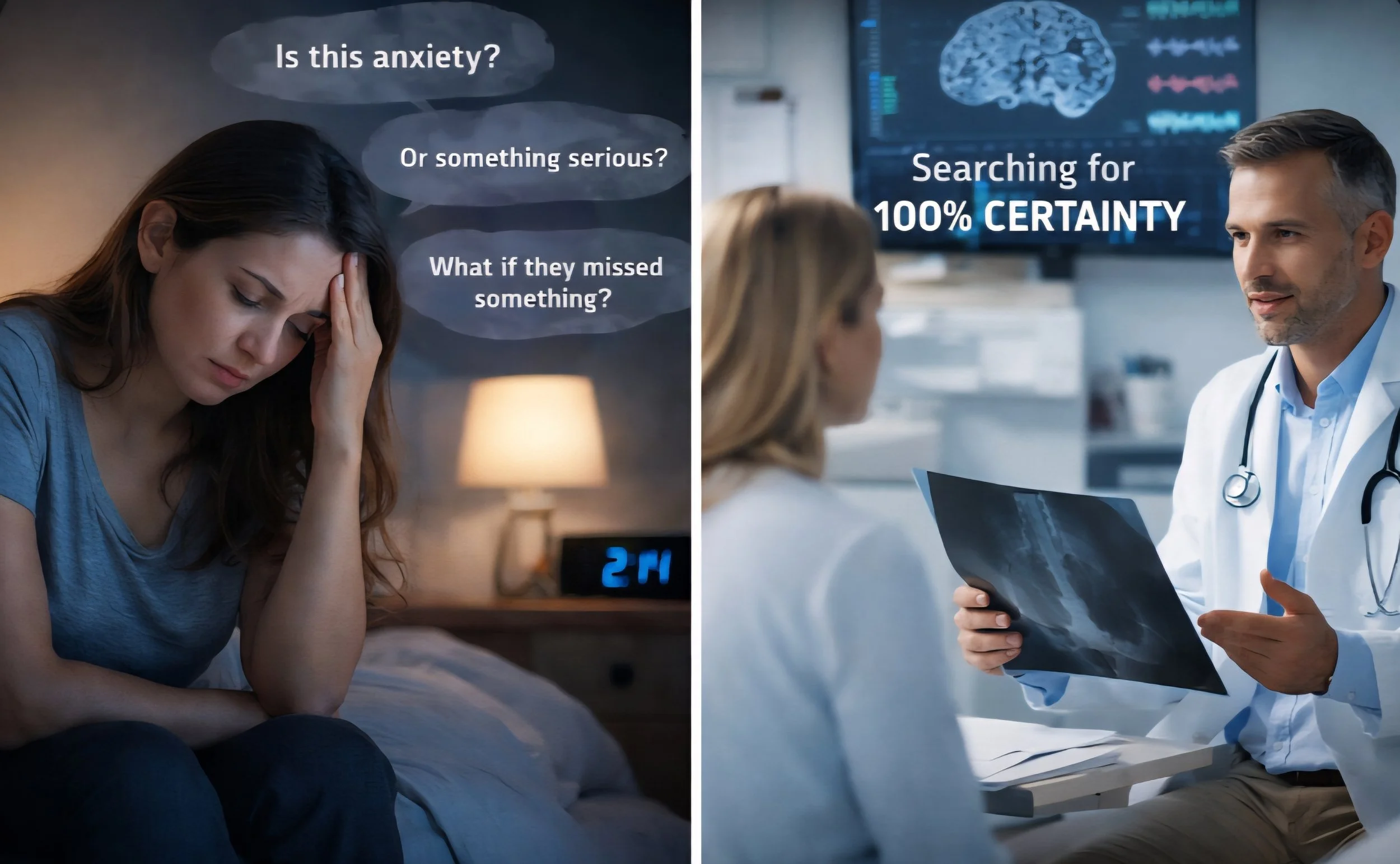
Health anxiety cycle showing woman worried about symptoms and seeking reassurance from a doctor, explained by a Colchester therapist
The “What If” Loop
Health anxiety thrives on uncertainty.
Your mind tries to protect you by asking:
“What if this is something serious?”
“What if I’m missing something?”
“What if it’s dangerous and I ignore it?”
So you respond in ways that make sense:
Googling symptoms
Checking your body
Seeking reassurance from doctors or loved ones
Monitoring sensations closely
And for a moment, you might feel relief.
But it doesn’t last.
Because the next thought comes in:
“But what if they missed something?”
And just like that, the cycle starts again.
Anxiety vs. Medical: The Trap of Certainty
One of the hardest parts of health anxiety is this:
You cannot get 100% certainty about your health.
Even medical testing doesn’t provide the level of reassurance that anxiety is looking for.
So if your goal is to finally feel sure, you’ll likely stay stuck in the loop no matter how many appointments, tests, or late-night searches you go through.
This is often the turning point in therapy. When clients begin to see that the problem isn’t a lack of information, it’s the way anxiety demands certainty that simply doesn’t exist.
A More Helpful Question
Instead of asking:
“Is this anxiety or something medical?”
Try asking:
“How am I responding to uncertainty right now?”
This shifts the focus away from solving something unanswerable
and toward something you can change.
It also helps you begin to step out of the cycle of fear and into a different relationship with your thoughts and body.
What Healing Actually Looks Like
Healing from health anxiety doesn’t mean you stop noticing your body.
It means:
You notice sensations without immediately assuming danger
You reduce checking and reassurance-seeking
You build tolerance for uncertainty
You respond to anxious thoughts differently
Over time, your body starts to feel less like a threat and more like something you can trust again.
As a Colchester therapist, this is the work I guide clients through every day helping them move from fear and constant monitoring to a more grounded, steady way of relating to their internal experience.
When to Seek Medical Care
Of course, taking care of your health matters.
If something is new, persistent, or concerning, it’s appropriate to consult with a medical provider.
But if you find yourself:
Repeatedly seeking reassurance for the same concern
Struggling to trust medical feedback
Feeling temporary relief that quickly fades
Constantly scanning your body for something wrong
…it may not be a medical issue.
It may be anxiety asking for certainty in a way that keeps you stuck.
You’re Not the Only One

Anxiety therapy session with a Colchester therapist providing support for health anxiety in a calm office setting
Health anxiety can feel incredibly isolating like you’re the only one experiencing it this way.
You’re not.
And more importantly, this is something that can change with the right support and approach.
If you’re looking for a therapist Colchester residents trust for anxiety treatment, know that help is available and you don’t have to keep managing this on your own. To work with a Colchester therapist, you can reach me here. If you’re not local to Colchester or prefer the comfort of your own space, I also offer online therapy across Connecticut, which can be especially helpful when anxiety makes leaving home or attending appointments feel overwhelming.